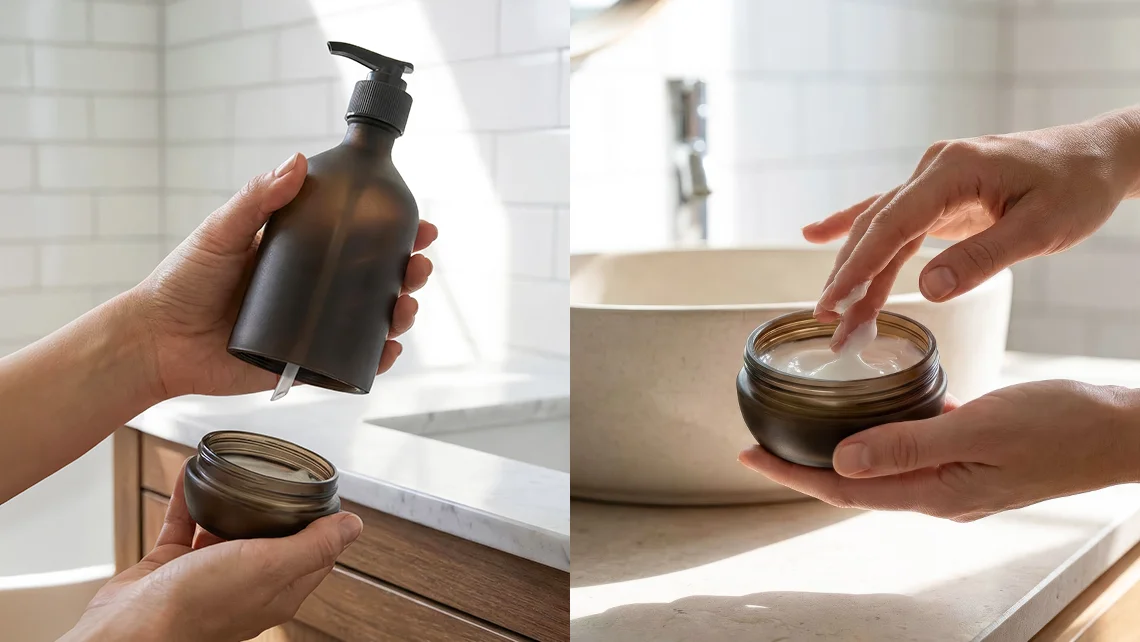
TWIST OVER WASTE
This project began with a small, familiar frustration: while using a cream bottle and trying to reach the remaining product at the bottom, I caught myself fighting the pump once again. The tube couldn’t reach it, and the last portion was left behind, as usual.
I decided to use that situation as the starting point for a new experiment. Not to design a fully engineered product, but to see how far I could take a simple idea using generative AI as a creative tool. The goal was to translate that initial insight into visuals, exploring how an object could be rethought and expressed through sketches, renders, and usage scenes.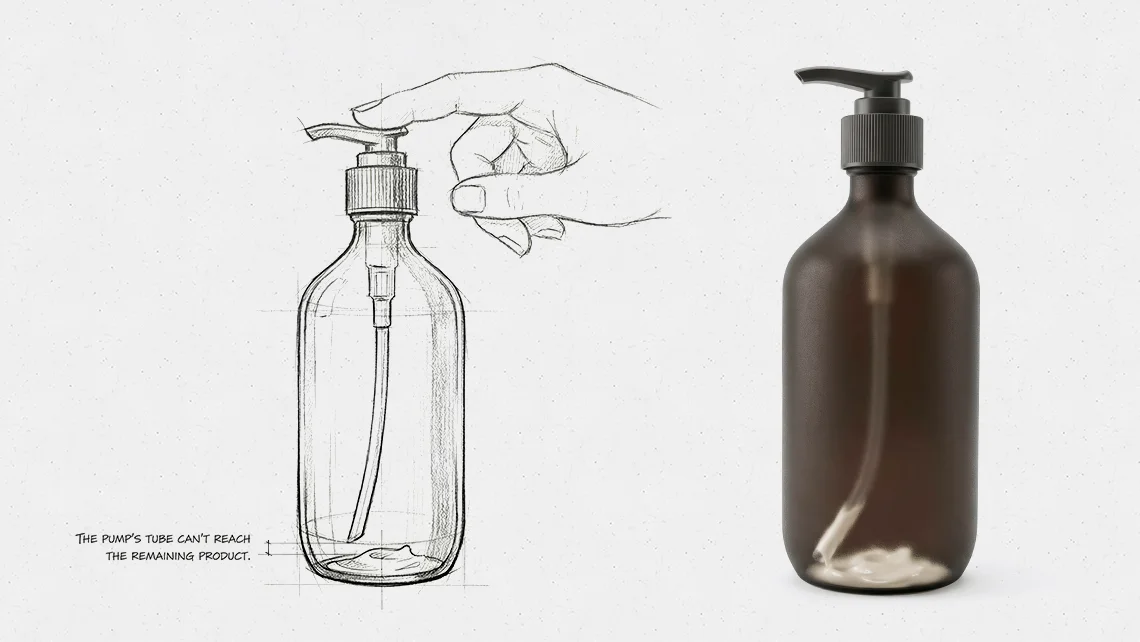
With the issue clearly framed, I could start exploring a possible alternative. The idea was simple: a bottom-opening system that allows direct access to what the pump can’t reach. Instead of forcing the last product out, the container could unscrew and transform into a small, standalone pot.
While cheaper and more utilitarian solutions already exist, I was interested in how this principle could live in a more premium context. The remaining product wouldn’t just be recovered, but elevated into a refined secondary object. The transition from the primary container to an elegant pot keeps the experience intentional from first use to last, making the final portion feel considered rather than leftover.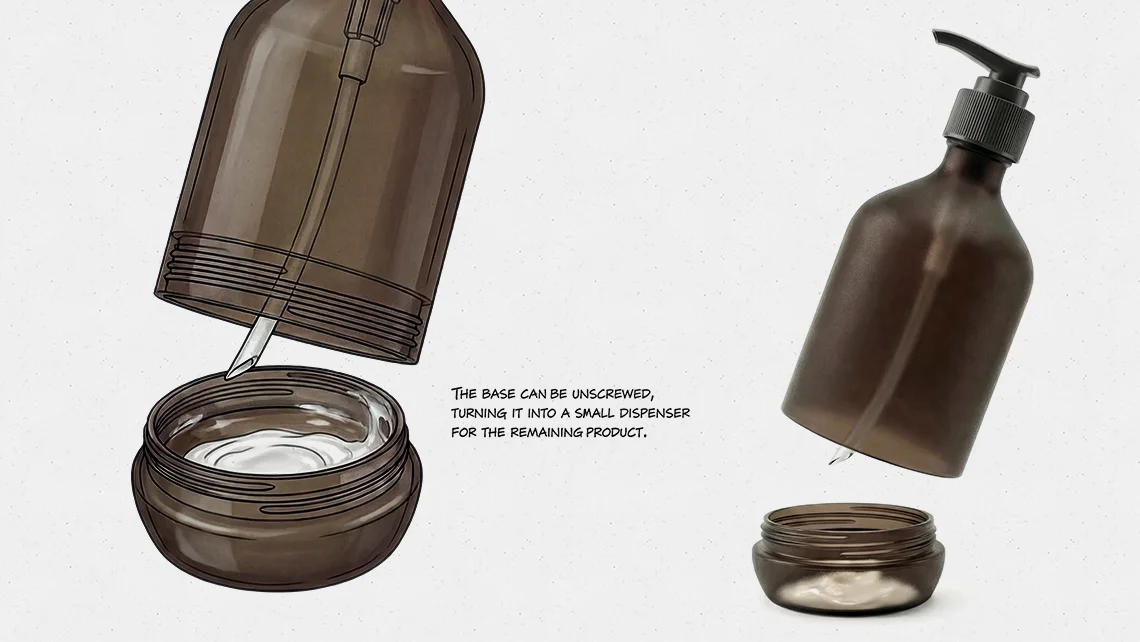
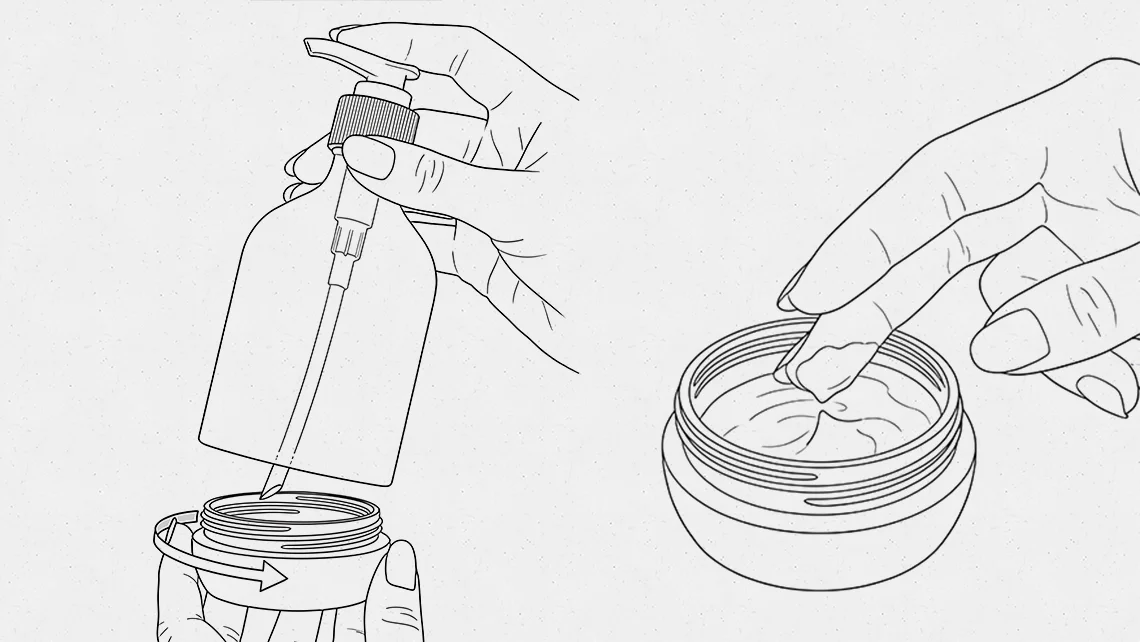
From there, I pushed the idea further into a potential real-world application. Using more realistic renders and lifestyle-style visuals, I explored how the object could look, feel, and be used if it were physically produced. This wasn’t about creating a marketing campaign, but rather testing the idea visually and seeing how convincing it could become when placed into everyday situations.
By moving from sketches to more concrete usage scenes, the project shifts from design exploration toward a tangible projection of what this object could be.